Weekly Wisdom: Leadership in Focus – Turning Fundamentals into Performance
Reclaiming Strength Through Leadership and Execution
Management teams matter. Across the corporate landscape, several legacy names long weighed down by misaligned leadership show that decisive management change remains a driver of value creation. The key is whether they’ve had success in the past and their proven strong execution. What we are witnessing now is a wave of revitalization driven by new management teams who have not only stabilized operations but are also redefining growth trajectories through sharper execution and strategic clarity. The combination of strong underlying businesses and leadership willing to make structural, and sometimes cultural, change is unlocking substantial shareholder value.
Restoring Confidence and Rebuilding Discipline
Boeing (BA) maintains a dominant duopoly market position, deep technological capacity, and a nearly 8-year-long $619 billion backlog. What faltered was execution, safety, and poor culture. Years of poor oversight, safety lapses, and public scrutiny surrounding manufacturing accidents eroded trust among regulators, customers, and investors. The company’s relationship with the Federal Aviation Administration (FAA) became strained, leading to stricter oversight, delivery suspensions, and production caps that further constrained profitability.
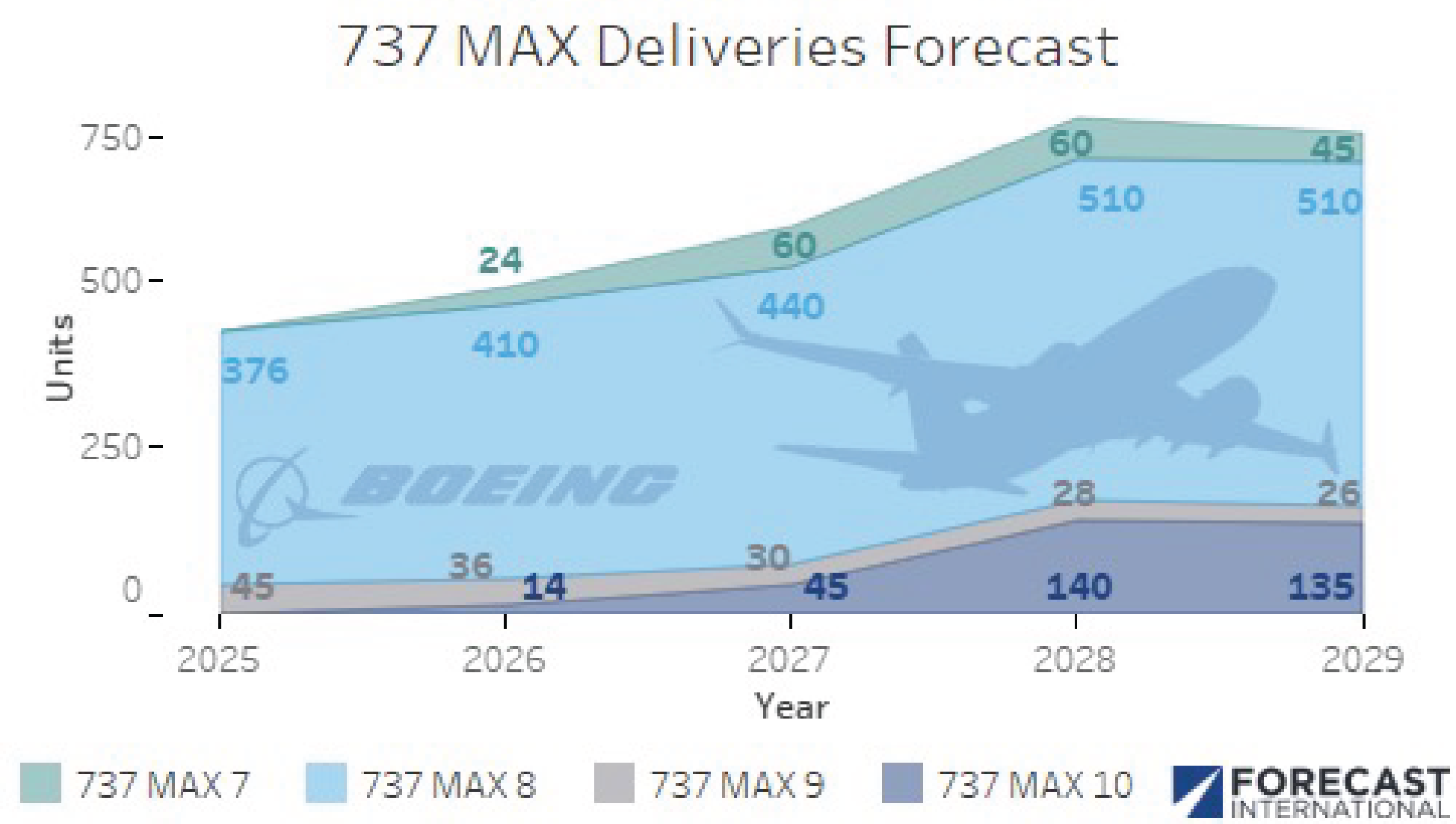
The new CEO, Kelly Ortberg, saw success during his prior leadership role at Rockwell Collins. From his introduction as Rockwell CEO up until its acquisition by UTC, Rockwell saw a total return of +107%. Before Kelly Ortberg’s position as CEO in August 2024, Boeing fell -50% from all-time highs in 2018.[1] Ortberg’s leadership has prioritized rebuilding Boeing’s safety culture and stabilizing operations. FAA restrictions are now easing as the company regains confidence in its manufacturing standards. This shift in management to prioritize safety has succeeded, as the FAA recently raised Boeing’s production cap from 35 to 42 737 MAX planes per month.
Operationally, Boeing has improved under Ortberg as well. The Commercial Airplanes segment sales are up +81% year-over-year. Large new contracts, including Turkish Airlines’ 50-plane order and Norwegian Air’s 30-plane expansion, further strengthen Boeing’s demand pipeline. Analysts forecast positive free cash flow in 2026 and EPS near $12 by 2029. Boeing’s turnaround, seeing over +34% revenue growth since August 2024,[2] demonstrates how leadership grounded in accountability can overcome even years of bad press and regulatory strain.
Boeing 737 Max Forecasted Deliveries Chart:[3]
Cultural Renewal and Product-Led Growth
3M (MMM), an industry, worker safety, and consumer goods conglomerate, had a similar story through the appointment of CEO Bill Brown in May 2024. Bill joined the firm after presiding over L3 Harris, overseeing a +731% return during his 11-year tenure. He entered 3M in the midst of challenges stemming from years of overextension and prioritization. The company’s massive product portfolio became an agility obstacle. Legal liabilities and supply-chain disruptions further compounded the issue, diverting resources away from growth initiatives. Despite having the balance sheet, technology, and brand equity to outperform, 3M suffered from a lack of strategic focus that left its fundamentals underutilized. By the time of Brown’s appointment as CEO, the stock was down 38% since its high in early 2018 and was in desperate need of innovation and productivity.
Brown reoriented 3M towards higher product velocity, simplifying their supply chain, utilizing cross-selling tactics, and improving operational efficiencies. As a result, organic sales grew 3.2% in the third quarter, outpacing a modest macro backdrop. Operating margins expanded to +22.2%, and earnings guidance rose for the second consecutive quarter in a row, rising to $8.05 a share.[4] 3M continues to show operational improvements as it reached its highest on-time performance in over 20 years, accelerated equipment effectiveness over 300 basis points year-over-year, and the quality of product improvement was driven by AI tools and automation tactics.
Unlocking Value Through Structural Simplicity
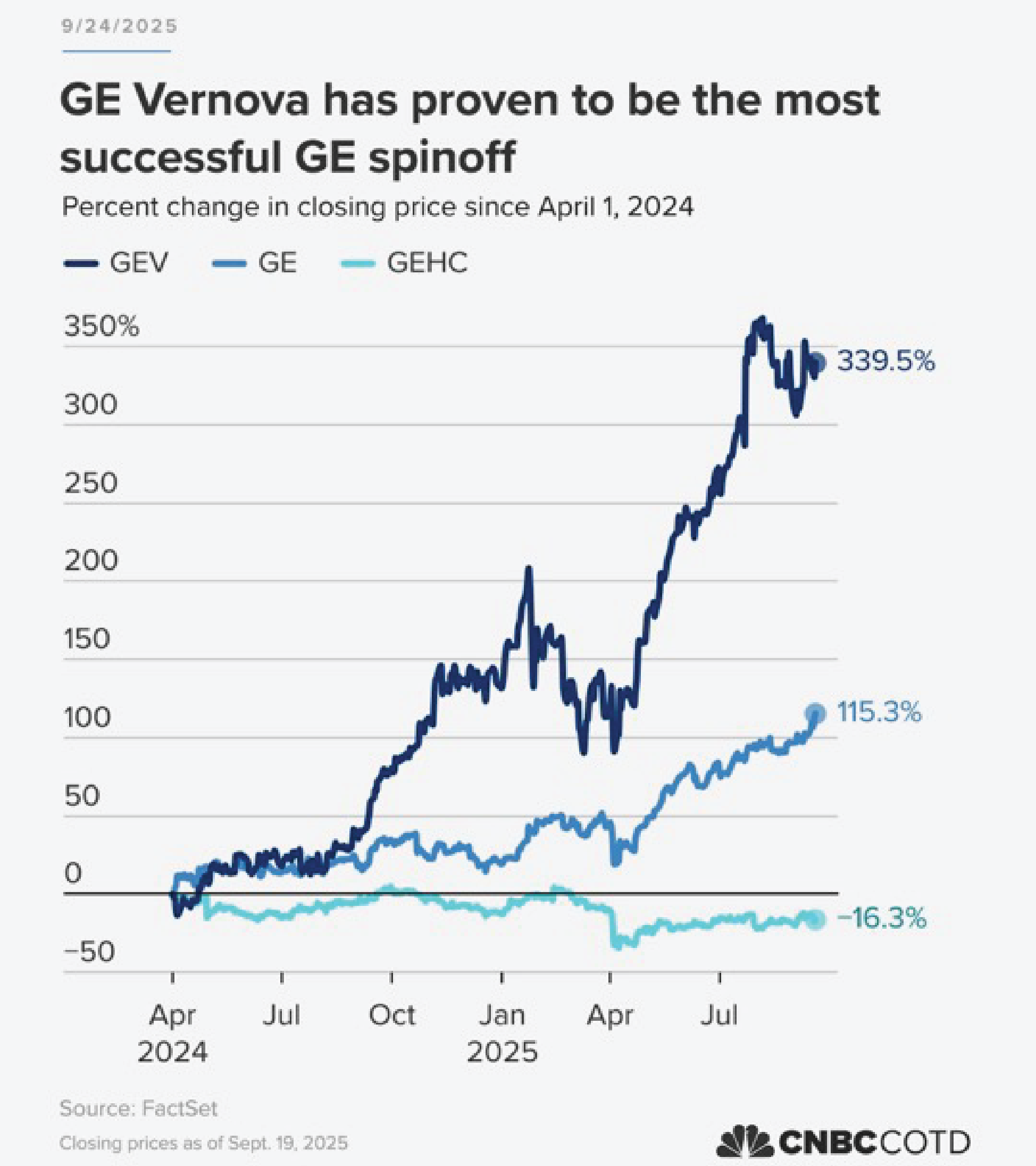
Perhaps the biggest success has been the appointment of Larry Culp as the CEO of GE in October 2018. For years, General Electric (GE) fundamentals were restricted by a web of complexity and poor capital allocation decisions. When Larry Culp took over, GE had fallen by more than -60% from all-time highs. His response was to begin to improve the simplicity at the company, provide a stronger culture, and focus on structural reform, spinning off GE into three independent businesses: GE Aerospace, GE Vernova, and GE HealthCare. Culp created operational clarity and financial transparency where confusion once reigned. GE’s spinoff serves as one of the most successful corporate restructurings in recent history, seeing a +454% return for GE Aerospace since Larry Culp’s induction as CEO.
By allowing each unit to gain control over its own strategy, cost base, and capital priorities, Larry enabled accountability and operational efficiency that had long been absent under the old management model. This success has become apparent in the third quarter as operational performance has followed suit. Commercial & equipment services revenue climbed 25% year-over-year,[5] while defense orders advanced 24% year-over-year, supported by both higher unit volumes and improved pricing.
GE Spinoff Performance Chart:[6]
Leadership Adaptability as a Catalyst
Companies like Broadcom (AVGO) and Vertiv (VRT) highlight that even with good fundamentals, the ability to recognize and pivot toward new structural trends is essential to convert stable operations into growth. Both companies showed robust performance this quarter as their management teams adapted quickly to the surging demand tied to artificial intelligence and digital infrastructure.
At Broadcom, president and CEO Hock Tan’s acquisition strategy and swift integration of VMware positioned the company at the center of virtualization enterprise computing. Tan has been a focal point of Broadcom winning multiple contracts to create custom ASIC chips for hyperscalers. In their recent earnings call, he stated that he will be staying as CEO of Broadcom through 2030 to see these contracts through, resulting in the stock rallying over 9% on the day because of his strong track record at the company in M&A, execution, and higher overall earnings and revenue growth. His focus on recurring software revenue, AI infrastructure, & custom ASICs has allowed Broadcom to lift gross margins above 78% percent and generate more than $19 billion in annual free cash flow.[7]
Vertiv, under CEO Giordano Albertazzi, executed a similar pivot, repositioning itself as a competitor in the AI buildout. On top of the CEO, Vertiv appointed Dave Cote as executive chairman, having seen a +447% return during his 14 years at Honeywell. By focusing its operations on high-demand power and thermal management systems for data centers, margin expansion grew over 400 basis points in 2024. Additionally, revenue grew 30% year-over-year in their recent quarter, showing the payoff from pricing discipline and supply-chain control.[8]
Early Stages of Leadership Transition
Both Nike (NKE) and Starbucks (SBUX) entered the quarter in the early stages of new leadership cycles, with Elliot Hill joining Nike in October 2024 and Brian Niccol joining Starbucks in September 2024. While both brands maintain dominant global positions and powerful consumer loyalty, their execution challenges have revealed how even market leaders must adapt to maintain relevance and reinvigorate growth.
At Nike, management is focused on improving inventory control, recalibrating its wholesale relationships, and reinvigorating consumer engagement after several quarters of sluggish product cycles. Starbucks, similarly, is refocusing on operational efficiency and customer experience after a period of overexpansion and margin compression. Both companies possess global reach, but their current challenge lies in translating that strength into consistent earnings growth. These will be companies worth watching in the next year to evaluate their strong leadership skills and whether they can weather the challenges.
The market continues to reward structure over size, focus over diversification, and execution over narrative. It is important to recognize opportunity as industries depend less on macro tailwinds and lean more on leadership’s ability to make coherent and consistent business decisions.
Stephanie Link’s TV Schedule:

[1] Bloomberg, as of October 2025
[2] Bloomberg, as of October 2025
[3] Forecast International, as of July 2025
[4] Bloomberg, as of October 2025
[5] Bloomberg, as of October 2025
[6] FactSet, as of September 2025
[7] Bloomberg, as of October 2025
[8] Bloomberg, as of October 2025
This material is for general information and educational purposes only. Information is based on data gathered from what we believe are reliable sources. It is not guaranteed as to accuracy, does not purport to be complete and is not intended to be used as a primary basis for investment decisions.
Find answers to your questions about Hightower Signature Wealth
Hightower Signature Wealth is a fiduciary wealth management practice that provides investment management, financial planning, estate strategies, insurance, and banking solutions. We work with families, business owners, professionals, women, and retirees across more than 40 offices nationwide. Our advisors take the time to understand your financial priorities, develop a plan around your goals, and adjust that plan as your life and circumstances evolve.
Hightower Signature Wealth provides a broad range of wealth management services designed to address different aspects of your financial life. Our capabilities include investment management, financial planning, retirement planning, estate strategies, insurance and risk management, banking solutions, and charitable giving strategies. By considering these areas together, our advisors can develop a coordinated approach based on your goals, priorities, financial circumstances, and plans for the future.
Hightower Signature Wealth advisors work with a broad range of clients, including women, families, business owners, professionals, retirees, and high-net-worth individuals navigating major life or financial transitions. Rather than applying a generic playbook, each advisor tailors the plan to a client’s specific goals and current stage of life – from early-career decisions to multigenerational wealth transfer.
Yes. Hightower Signature Wealth advisors serve as fiduciaries, which means they are committed to acting in their clients’ interests when providing investment advice. We offer fee-based advisory services, with fees depending on the services provided and the specifics of your relationship. Your advisor will discuss the applicable fee structure with you so you can understand how you are charged and what services are included.
Hightower Signature Wealth has more than 40 offices nationwide, allowing our advisors to serve individuals, families, and organizations across the country. Depending on your location and preferences, you may be able to work with an advisor locally or connect with a team in another market. Visit our Locations page to explore our office locations, learn more about the teams in each market, and find an office near you.
Getting started with Hightower Signature Wealth is simple. Complete our online contact form with some basic information about yourself and what you are looking for, and we’ll connect you with an advisor who can discuss your needs and financial priorities. That initial conversation is an opportunity to learn more about our approach, ask questions, and determine whether working with a Hightower Signature Wealth advisor may be a good fit.
Your first conversation is an opportunity for us to learn more about you, your financial circumstances, and what you hope to accomplish. An advisor may ask about your goals, current investments, family considerations, business interests, and other priorities that could influence your financial plan. You’ll also have an opportunity to ask questions, learn about our approach, and discuss what working together could look like.