Seven Keys to Financial Independence in the Age of Disruption
1. Stay Healthy
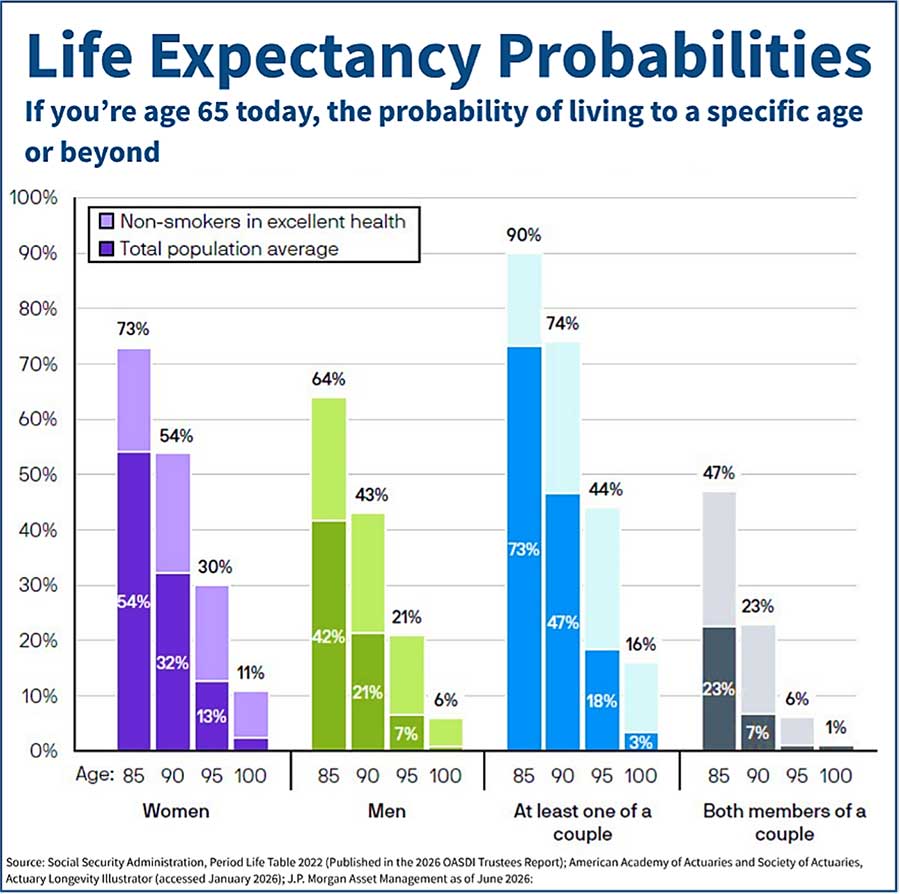
Health is your number one asset. Losing your physical or mental health is a high predictor of loss of independence later in life.
Our team has spent decades helping hundreds of clients through various transitions in their lives. We have special training and focus on specialized tools for clients entering or already in the fourth quarter of life, a period that is especially challenging for some.
From orthopedic surgeon Dr. Howard Luks:
Seven Things This 63-Year-Old Surgeon Would Tell My 40-Year-Old Self
I am 63 now, and I spend my days as an orthopedic surgeon watching how people’s earlier choices show up in their bodies decades later. I see it in my college friends, high school buddies, and patients that I have known for 20+ years.
If I could sit across from myself at 40, here is what I would want that person to understand. None of what follows is complicated, and all of it compounds over the decades… either against you… or in your favor. You are largely in control.
- Your health is the foundation, not the reward. Most of us treat fitness, sleep, and strength as things we will get to once the real work is done. The problem is that health is the one asset you cannot easily buy back later, no matter the price. You can rebuild a career, recover from a bad investment, and repair most mistakes given enough time. The capacity you let slide in your forties and fifties is far harder to reclaim, and some of it never comes back. Invest in it now.
- Strength buys you freedom later. Muscle, balance, and aerobic capacity are not about how you look in a mirror at 40. They are about whether you can carry your own groceries, get up off the floor, and stay independent at 80. I see the people who built that capacity early and the ones who did not, and the difference decades later is enormous. The strength you build now is the freedom you are banking for your future self.
- Small habits compound, and so do small problems. What you ignore does not stay quiet. It grows louder over time, the nagging joint, the creeping weight, the sleep you keep shortchanging. On the other hand… The walk, the lifting session, the early night, and the phone call to a friend don’t feel like much on the day you do them, but they add up faster than you think.
- Most stress is not worth your nervous system’s health. Cognitive inflammation is real… cable news, many newspaper articles, your IG feed, toxic people… don’t rent space in your head to things that will harm you. Very few things in a given week warrant a full stress response, yet we allow many of these issues to constantly enter our stream of consciousness. Learn to tell the difference between what truly matters and what merely feels urgent, and let the rest pass through you without taking up residence. Your body keeps score of the stress you carry, so carry less of it.
- Choose your people carefully, then show up for them. You do not need a wide circle. You need a few people you trust, invest in, and remain genuinely connected to. Relationships do not survive neglect, and they survive it even less in a world that lets us mistake a screen for presence. Decide who matters, then do the unglamorous work of staying close to them.
- Life does not get clearer later. You just get better at seeing it. Stop waiting for certainty before you act, because it never quite arrives. Say what matters now. Make the decision now. Live in a way you will not have to explain or apologize for later. The clarity you are waiting for mostly comes down to paying attention, and you can start practicing today. I think being a surgeon made this easier.
None of this is about doing it perfectly. It is about pointing yourself in the right direction and doing it long enough for it to matter. If you are 40, or 50, or 65, or starting over from wherever you are right now… It is never too late, nor too early, to begin. Your future self will thank you.
2. Know Your Financial Targets
Having identified goals helps you march to your own drummer instead of relying on vague notions of how much you should spend or how much you should make in investment returns. Knowing your Core asset need for true financial independence vs your Explore potential (excess risk funds) helps you keep your focus and provides a framework for resisting the temptation to invest in riskier assets.
Should you trim highflyers or buy into the techno-industrial revolution (AI, robotics, biotech, etc.)? If you know how much you can afford to have in more speculative areas by understanding your Core needs, it allows you to make more rational decisions about Explore assets.
Nearly 68% of Americans underestimate their retirement needs, leading many to hoard cash or severely under-spend out of fear, which compromises their quality of life. Half of our retired clients cite not saving enough earlier in life as one of their top five regrets, a behavioral shortfall often exacerbated by present bias (spending for today because tomorrow is not guaranteed) and overconfidence during their working years.
Our Financial Independence Roadmap® helps you home in on targets unique to your situation, stress-test future economic scenarios, and separate the Core from the Explore. Not only did we trademark this important tool, but we also use our scenario expertise to help our clients gain confidence and clarity. The Financial Planning Association called us “one of the leaders in scenario planning.” No magic crystal balls, just sound planning practices to help guide our clients through good times and bad.
The sequence of return risk chart highlights how downside volatility or choppy markets early in your retirement journey can create problems later on. This underscores why it’s so important to stress-test your future financial independence and why the AI question today – is it a big bubble, a rational bubble, or a rational buildout – is so critical to understand.


3. Avoid Behavioral Landmines
The top five include:
- Fear
- Greed
- Fear of rebalancing and tax consequences
- Loss of gratitude
- Loss of purpose
Living in a time of greater disruptions and uncertainty spills over into our ability to stay grounded and avoid fear, greed, and even short of outright fear, elevated anxiety.
Andrew Ross Sorkin, CNBC’s Squawk Box co-host, one of our favorite observers of the economy and markets, and the author of 1929: Inside the Greatest Crash in Wall Street History, calls this period we’re in “The Uneasy Season.” He was recently on a 2026 worldwide book tour and heard similar stories of unease from people in all walks of life – the disconnect between how things look and how they feel. The insecurities of CEOs, the parent trying to keep up, the creator wondering whether their audience will care tomorrow in a fast-paced world, and the investor trying to outperform others and themselves.
In The Psychology of Money, Morgan Housel argues that financial success is driven more by behavior and emotional intelligence than by other factors. True wealth is defined by the freedom and control you have over your time, while the biggest financial blunders stem from ego (including overconfidence and underconfidence) and from comparing yourself to others in your inner circle or to people you hear about on TV or in articles you read.
“The ability to do what you want, when you want, with who you want, for as long as you want, is priceless. It is the highest dividend money pays.”
– Morgan Housel in The Psychology of Money
Two keys from the book and our experience that may help your anxiety:
- Getting Rich vs. Staying Rich
Building wealth requires taking risks, staying optimistic, and putting yourself out there. Conversely, preserving wealth requires humility, paranoia, and a healthy dose of caution. Good investing is not about always being brilliant; it is about building a system that can withstand unpredictable setbacks. - Wealth is What You Don’t See
People often confuse “rich” with “wealthy.” Rich is an observable, temporary display of income – such as buying expensive cars or designer clothes. Wealth is unspent money held in assets or investments. It is defined by the choices and freedom it provides, not by the items you purchase to show off.
4. Adjust Your Investment Strategy with the Changing Times
There are some investment concepts that are tried and true. Diversification. Paying attention to both reward and risk. It’s what you make after-tax that counts. In the techno-industrial revolution, these should be paired with other focus areas to adapt to the changing times.
A few examples:
- Value vs. Growth: Twenty-five years ago, retirees were routinely advised that value stocks with growing or high dividends should make up 85% of their stock portfolio. Those who stuck with that strategy captured less than 70% of stock returns over the last decade. Many well-known value managers’ portfolios now look more like growth portfolios. Maybe that’s okay if you’re still on track to your target (#2 above). What worked over the last 10 years may play out differently over the next 10 years.
- Public vs. Private: More companies are choosing to stay private longer, and many solid companies have gone private after being public. This trend is likely to persist in the next decade. Many of these private companies are disruptors to their public counterparts.
- Individual Stocks vs. Diversified Portfolios: SFG has a long history of crafting diversified individual-stock portfolios and “pruning the garden” as needed when select stocks become overvalued or no longer have strong prospects. Numerous studies have shown that asset allocation, not individual stock selection, is more important to long-term success. We remain positive on both individual stocks and ETFs/mutual funds – as more individual companies are disrupted by the techno-industrial revolution, we tend to prefer diversified funds for core portfolios, reserving individual stock selections for Explore portfolios. Many of our clients have long-held individual stock holdings with low cost basis – each portfolio is custom-designed to take these holdings into account.
- Bonds as the Majority Asset Later in Life: In the traditional 60% stock/40% fixed-income portfolio, bonds represented most, if not all, of the 40%. In the Great Recession of 2008/09, high-quality bonds were among the few asset classes that held value and actually went up. That approach worked until it was upended by shifts in inflation and interest-rate policy. Future pressure from the national debt is likely to create more volatility in interest rates, spilling over into the defensive capability of bonds.
- Stock Substitutes and Bond Substitutes: These are now routinely used by many large family offices, pension plans, and endowments. Increasingly, individuals are considering these options due to the acceleration of age-related disruption scenarios that require some level of enhanced risk mitigation.
- Hedging Risk: Depending on your core and explore balance, hedging strategies may make sense in retirement. These can include holding more cash from time to time, all the way to specialized strategies that enhance diversification with minimal tax consequences. Always remember that volatility is your friend while accumulating assets and your enemy when withdrawing from your assets.
- Rebalancing Used To Be More Systematic: periodically or based on volatility targets, sell the assets that have gone up the most and buy more of the assets that have gone down. With the shifting disruptions of the techno-industrial revolution, growing geopolitical risks, and macro issues such as the first- and second-order effects of the growing U.S. national debt, rebalancing needs to be done more thoughtfully, consistent with the changing trends and your unique financial situation.
- Tax Matters: Taxes still matter, but they should not overly influence investment decisions. We use asset location, tax loss harvesting, tax free exchanges and other tax techniques to be tax-smart, but not to the point that they override sound economic decisions. The old saying, “Don’t let the tax tail wag the financial dog,” is still true today.
- Portfolio Expenses: As a fee-only fiduciary, we don’t get paid differently whether we use individual stocks and bonds or more diversified funds. We shift our focus between individual securities and active and passive managers depending on the environment, our client’s risk priorities, and the asset class we’re using. We are entering a period when active management, with somewhat higher expense ratios, may outperform indexing. Just as taxes are important but shouldn’t override sound economic decisions, expenses should be considered but not at the expense of making good decisions. We strive to use low-cost ETFs and mutual funds (especially lower-cost institutional classes) wherever possible. Some of our best active managers have modestly higher expense ratios and have delivered results that justify the extra cost.

5. Spend Wisely
If you know your financial targets (#2 above), it becomes easier to achieve them. Spend too much, and you may find yourself behind later in life. Spend too little, and you may not have the life you want while you’re healthy and in your go-go years. Your Financial Independence Roadmap® helps you create the right balance over time.

Understanding how inflation affects your unique spending helps as you think about balancing spending while having reliable inflation-protection investments in your portfolio. SFG has done many studies of how our clients spend money. We’ve found that few clients spend money the way the artificially constructed Consumer Price Index (CPI) shows. Many clients have become more savvy shoppers – the Age of Disruption is beneficial to consumers by giving them more options for bargains right at their fingertips through their smartphone. Future trends suggest inflation will continue to be a problem, but many of the technology advances expected in the next decade will be deflationary, offsetting other inflationary pressures. Inflation is very unlikely to be as high as it was post-pandemic.

6. Surround Yourself with Wise Counsel
According to historical data from Morningstar, over 77% of retirees and pre-retirees make avoidable financial and decision-making errors. These psychological blind spots carry a steep cost – Morningstar calculates that behavioral mistakes cost investors an average of 1.2% annually in returns. Without a solid financial plan and behavioral coaching from professionals, emotional responses and poor asset allocation can reduce overall retirement wealth by nearly 30%, according to David Bach, a behavioral finance specialist.
Objective decision-making depends on experienced opinions in your advisory circle. Experience counts – a disciplined, data-driven strategy is ideal if it’s adjusted to changes in markets and the economy due to the Age of Disruption.
A sounding board (friends, spouse, and professional) keeps you on track with long-term goals (e.g., retirement, estate planning) and prevents impulsive spending or premature asset liquidation when scary headlines keep you up at night. We believe that a balance of “sleep well and eat well” serves most retirees best, perhaps even more so in the highly disruptive period we are entering.
- Friends: Comparing notes with friends can be helpful – they don’t need to have an MBA but they do need to be well grounded and have common sense.
- Advisors: Prioritize fiduciary advisors who have no hidden agendas. Look for intelligent approaches, but be wary of advisors who seem unwilling to adjust strategy or are always searching for the “next great idea.” True financial guides consider and integrate multiple aspects of your life – including behavioral finance best practices, lifestyle changes as you age, insurance as life stages change, spending and inflation shifts, and legacy planning – into a single, cohesive roadmap.
- Balanced Reading or Viewing of Financial Ideas: In today’s world, some financial shows and internet blogs tell only half the story. Many are sensationalized to keep you tuning in, but they raise your stress level or influence you to give in to fear or greed. Balance your consumption of financial news and focus more on solid thinkers rather than highly opinionated talk show hosts or bloggers.
7. Plan Smart for the Slow-Go and No-Go Years of Your Life
The go-go years have stretched out for many compared to prior generations, but none of us know how long we can stay in go-go mode. Slow-go years used to be short before major health care problems moved us into no-go mode. Now the slow-go years are also stretching out for many people.
Key Issues Include:
- Consider Different Rebalancing Targets Later in Life. You may live longer, requiring more growth or inflation-hedging assets than prior generations would have needed. Your Financial Independence Roadmap® and your sleep well and eat well goals can help you and your advisors balance these competing priorities.
- Age in Place vs. Life Care Community. Half of our clients have chosen to age in place at home, with the pros and cons that come with it. Choose your life care community carefully – 10% of our clients wish they had spent more time evaluating options. However, don’t overanalyze – it is true that you would be better off choosing a life care community five years too early than five minutes too late.
- Having a Long-Term Care Plan (which may or may not include insurance). Our Senior Care planning includes evaluating quality and cost options for those who elect to age in place at home.
- Update Your Estate Plan. Choose trustees carefully, and include contingencies for issues such as dementia and above-average health care costs. Many Fourth Quarter Fumbles, financial and non-financial, occur in the early onset phase of dementia, when guardrails and boundaries have not been well established.
- Be even more intentional about items #1-6 above later in the fourth quarter of life.


Planning for retirement is not a one-and-done approach, especially in the changing world today. If you feel that any of the areas covered here need more strength or balance, talk to your advisor.
This material is for general information and educational purposes only. Information is based on data gathered from what we believe are reliable sources. It is not guaranteed as to accuracy, does not purport to be complete and is not intended to be used as a primary basis for investment decisions.
Find answers to your questions about Hightower Signature Wealth
Hightower Signature Wealth is a fiduciary wealth management practice that provides investment management, financial planning, estate strategies, insurance, and banking solutions. We work with families, business owners, professionals, women, and retirees across more than 40 offices nationwide. Our advisors take the time to understand your financial priorities, develop a plan around your goals, and adjust that plan as your life and circumstances evolve.
Hightower Signature Wealth provides a broad range of wealth management services designed to address different aspects of your financial life. Our capabilities include investment management, financial planning, retirement planning, estate strategies, insurance and risk management, banking solutions, and charitable giving strategies. By considering these areas together, our advisors can develop a coordinated approach based on your goals, priorities, financial circumstances, and plans for the future.
Hightower Signature Wealth advisors work with a broad range of clients, including women, families, business owners, professionals, retirees, and high-net-worth individuals navigating major life or financial transitions. Rather than applying a generic playbook, each advisor tailors the plan to a client’s specific goals and current stage of life – from early-career decisions to multigenerational wealth transfer.
Yes. Hightower Signature Wealth advisors serve as fiduciaries, which means they are committed to acting in their clients’ interests when providing investment advice. We offer fee-based advisory services, with fees depending on the services provided and the specifics of your relationship. Your advisor will discuss the applicable fee structure with you so you can understand how you are charged and what services are included.
Hightower Signature Wealth has more than 40 offices nationwide, allowing our advisors to serve individuals, families, and organizations across the country. Depending on your location and preferences, you may be able to work with an advisor locally or connect with a team in another market. Visit our Locations page to explore our office locations, learn more about the teams in each market, and find an office near you.
Getting started with Hightower Signature Wealth is simple. Complete our online contact form with some basic information about yourself and what you are looking for, and we’ll connect you with an advisor who can discuss your needs and financial priorities. That initial conversation is an opportunity to learn more about our approach, ask questions, and determine whether working with a Hightower Signature Wealth advisor may be a good fit.
Your first conversation is an opportunity for us to learn more about you, your financial circumstances, and what you hope to accomplish. An advisor may ask about your goals, current investments, family considerations, business interests, and other priorities that could influence your financial plan. You’ll also have an opportunity to ask questions, learn about our approach, and discuss what working together could look like.