Weekly Wisdom: Consumer Support and AI Expansion Signals a Constructive Outlook
Targeted Tariff Exemptions Strengthen Consumer Purchasing Power
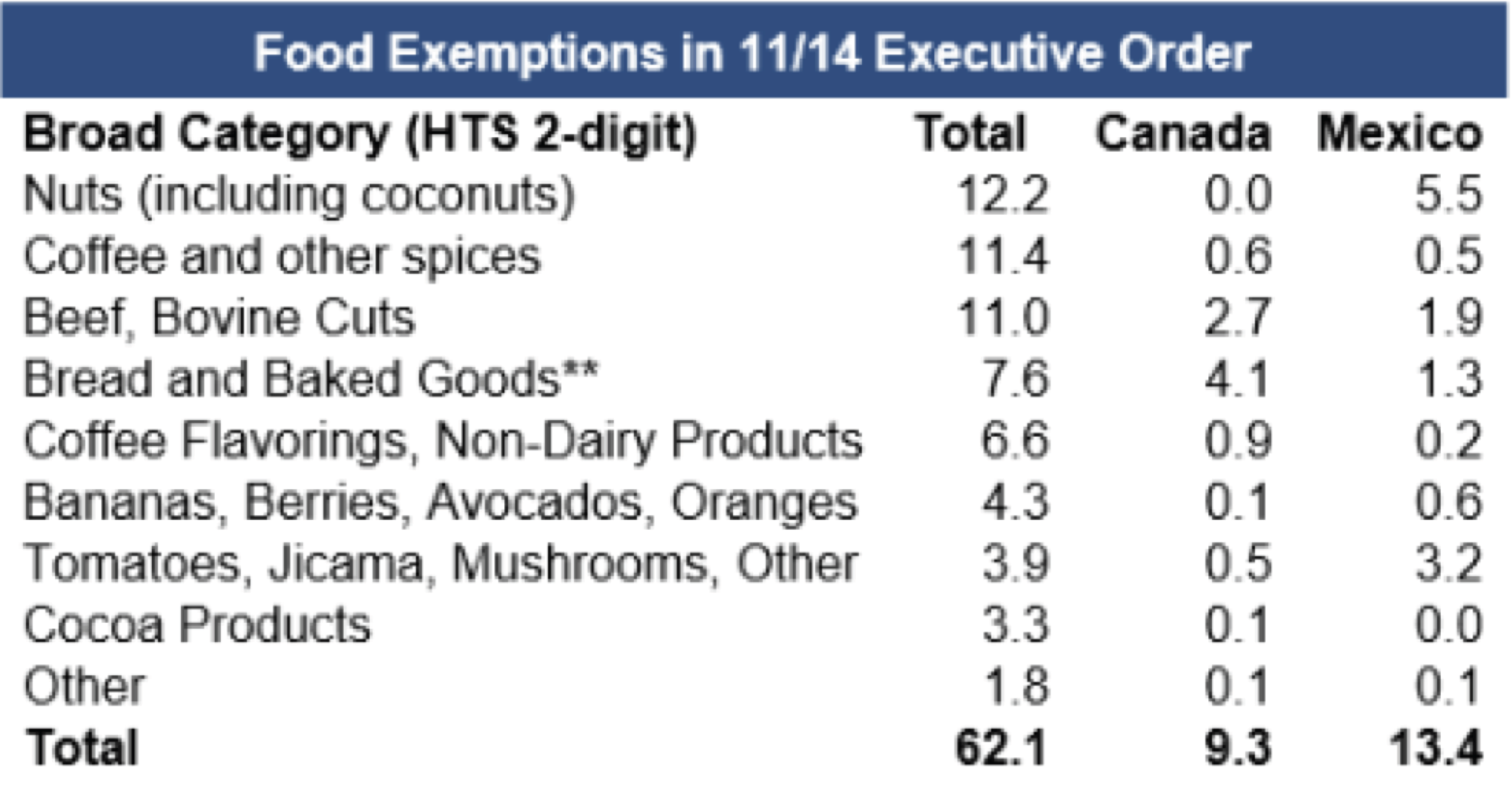
The Trump Administration has introduced a broad set of tariff exemptions designed to strengthen the consumer by lowering costs on essential goods and expanding real purchasing power. The policy removes reciprocal tariffs on approximately $62 billion of food imports that are not produced domestically. The incremental tariff relief totals roughly $40 billion, equating to mid-single-digit billions in annual savings.1
These changes offer immediate support for consumers as groceries represent one of the most frequent costs among households. Lower-income households typically spend up to 15 percent of their income on food compared with 8 percent for higher-income groups, making tariff relief particularly impactful in expanding financial flexibility.2
An additional $5 billion of fertilizer imports were also exempted, which reduces input costs and supports lower food prices across the supply chain. Apparel and certain consumer electronic categories appear to be next in line for potential relief, especially in segments not produced within the United States. Overall, these measures reflect a clear policy direction aimed at empowering consumers and supporting stable demand across the broader economy.
At a time when tariffs are capturing the headlines in a cautious way, we believe some of these rollbacks will help to reduce the inflationary implications and help the consumer.
Tariff Exemption Rates Charts3
AI Capex and Corporate Debt: A Strength-Based Cycle
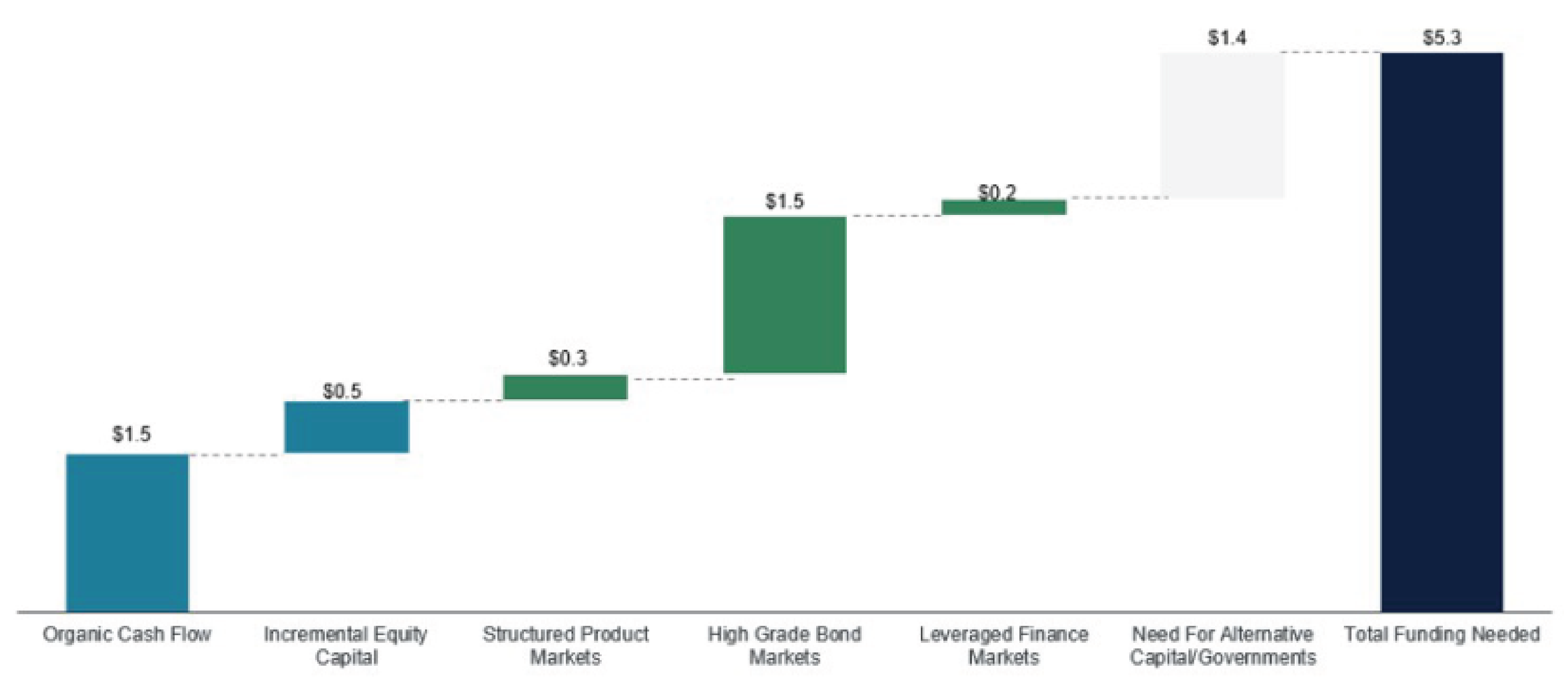
AI investment continues to accelerate, and the scale of spending demonstrates we are in the early innings of AI expansion. Across the major hyperscalers, AI capital expenditures are expected to reach over $360 billion in 2025.4 These represent multiyear commitments that require long-life financing, and the leading technology companies have begun to tap credit markets to match the duration of these investments with the duration of their capital. The borrowing we are seeing today is an extension of this massive expansion, rather than a sign of weakness, as the most recent transactions offer a clear signal of market confidence.
Amazon is preparing to raise $15 billion after investor orders reached $80 billion, significantly surpassing the company’s initial target of $12 billion. The proceeds will support capital expenditures and share buybacks, reinforcing Amazon’s ability to invest in AI infrastructure while maintaining financial flexibility.
Meta Platforms completed a $30-billion-dollar debt offering in November, issuing senior notes maturing between 2030 and 2065. This transaction strengthens Meta’s funding base as it builds long-duration AI and data center capacity.
Alphabet sold $17.5 billion of bonds in the United States after issuing $6.5 billion euros in Europe, equal to approximately $7.48 billion. These transactions align with Alphabet’s aggressive AI infrastructure investment strategy and expanding global data center footprint.
The scale of investor demand for these offerings highlights how major AI platforms continue to secure funding on favorable terms, which supports the continued expansion of data‑center capacity, compute availability, and AI infrastructure. Notably, the bond markets are signaling confidence. Compared to the +143 bps credit spread for investment-grade 40-year corporate bonds, Amazon’s 40-year tranche was initially marketed at roughly +115 bps above U.S. Treasuries, before tightening to +85 bps. Meta additionally priced its 40-year maturities at spreads of approximately 110 bps above Treasuries. These relatively tight spreads for long-dated debt underscore that investors are willing to commit capital to these firms’ multiyear AI buildout.
AI/Data Center Funding Sources Chart5
Debt Issuance Backed by Strong Cash Flow
The financing of this AI expansion is being supported by exceptional balance sheet strength across the largest platforms. These companies are using a blend of strong operating cash flow and opportunistic debt issuance to fund long-duration AI infrastructure without pressuring their financial positions. Free cash flow is the key focal point when watching financing from these companies, and it remains strong for the leading technology companies.
Amazon generated $130.7 billion in operating cash flow over the last twelve months and produced $14.8 billion in free cash flow while investing $115.9 billion in capital expenditures.6 The company continues to hold negative net debt, meaning that its cash and marketable securities exceed total debt obligations, providing significant flexibility for additional AI and data center investment amazon ai debt.
Alphabet reported $151.4 billion of operating cash flow over the last twelve months, alongside $77.9 billion in capital expenditures, resulting in a free cash flow of $73.9 billion.7 With a net debt position of $21.2 billion dollars Alphabet retains substantial financial capacity to support AI-related expansion, even as infrastructure requirements grow AI capex debt.
Microsoft generated $147.0 billion of operating cash flow and $78.0 billion of free cash flow over the last twelve months while investing $69.0 billion in capital expenditures tied to AI and cloud growth.8 The company maintains negative net debt, which provides a strong liquidity base to continue supporting its multiyear AI buildout.
Meta produced $107.6 billion of operating cash flow over the last twelve months, generating $44.9 billion in free cash flow, and continues to manage leverage effectively while investing heavily in data center and AI infrastructure.9
These companies are not relying on debt out of necessity. They are using it strategically to match long-life AI assets with long-living financing while leaning on powerful cash flow engines to support repayment. As a result, the narrative that rising borrowing tied to AI spending creates financial risk is overstated. The structure of these issuances and the strength of investor demand show that markets view this investment cycle as credit positive and fundamentally sustainable.
Stephanie Link’s TV Schedule:

[1] Evercore, as of November 2025
[2] Bloomberg, as of November 2025
[3] Evercore, as of November 2025
[4] J.P Morgan, as of November 2025
[5] J.P Morgan, as of November 2025
[6] Bloomberg, as of September 2025
[7] Bloomberg, as of September 2025
[8] Bloomberg, as of September 2025
[9] Bloomberg, as of September 2025
This material is for general information and educational purposes only. Information is based on data gathered from what we believe are reliable sources. It is not guaranteed as to accuracy, does not purport to be complete and is not intended to be used as a primary basis for investment decisions.
Find answers to your questions about Hightower Signature Wealth
Hightower Signature Wealth is a fiduciary wealth management practice that provides investment management, financial planning, estate strategies, insurance, and banking solutions. We work with families, business owners, professionals, women, and retirees across more than 40 offices nationwide. Our advisors take the time to understand your financial priorities, develop a plan around your goals, and adjust that plan as your life and circumstances evolve.
Hightower Signature Wealth provides a broad range of wealth management services designed to address different aspects of your financial life. Our capabilities include investment management, financial planning, retirement planning, estate strategies, insurance and risk management, banking solutions, and charitable giving strategies. By considering these areas together, our advisors can develop a coordinated approach based on your goals, priorities, financial circumstances, and plans for the future.
Hightower Signature Wealth advisors work with a broad range of clients, including women, families, business owners, professionals, retirees, and high-net-worth individuals navigating major life or financial transitions. Rather than applying a generic playbook, each advisor tailors the plan to a client’s specific goals and current stage of life – from early-career decisions to multigenerational wealth transfer.
Yes. Hightower Signature Wealth advisors serve as fiduciaries, which means they are committed to acting in their clients’ interests when providing investment advice. We offer fee-based advisory services, with fees depending on the services provided and the specifics of your relationship. Your advisor will discuss the applicable fee structure with you so you can understand how you are charged and what services are included.
Hightower Signature Wealth has more than 40 offices nationwide, allowing our advisors to serve individuals, families, and organizations across the country. Depending on your location and preferences, you may be able to work with an advisor locally or connect with a team in another market. Visit our Locations page to explore our office locations, learn more about the teams in each market, and find an office near you.
Getting started with Hightower Signature Wealth is simple. Complete our online contact form with some basic information about yourself and what you are looking for, and we’ll connect you with an advisor who can discuss your needs and financial priorities. That initial conversation is an opportunity to learn more about our approach, ask questions, and determine whether working with a Hightower Signature Wealth advisor may be a good fit.
Your first conversation is an opportunity for us to learn more about you, your financial circumstances, and what you hope to accomplish. An advisor may ask about your goals, current investments, family considerations, business interests, and other priorities that could influence your financial plan. You’ll also have an opportunity to ask questions, learn about our approach, and discuss what working together could look like.