Weekly Wisdom: Strong Banks and Contained Credit Risk
Credit Concerns Emerge from First Brands and Tricolor
Recent volatility has impacted credit markets, driven by two high-profile bankruptcies, First Brands Group and Tricolor. First Brands, a major U.S. auto parts manufacturer with more than $11 billion in liabilities, filed for Chapter 11 at the end of September following years of leveraged acquisitions and non-transparent financing structures. The collapse has rattled confidence in segments of the private credit market.
At nearly the same time, Tricolor, a used car seller and subprime lender that marketed to customers excluded from traditional banking systems, like those in low-income immigrant communities, filed for Chapter 7 liquidation amid reports of financial misconduct. The combination of these two failures rang concern across the market that pockets of consumer credit, particularly tied to subprime lenders, are showing early signs of strain.
Auto Asset Backed Securities Weakness Highlights Subprime Stress
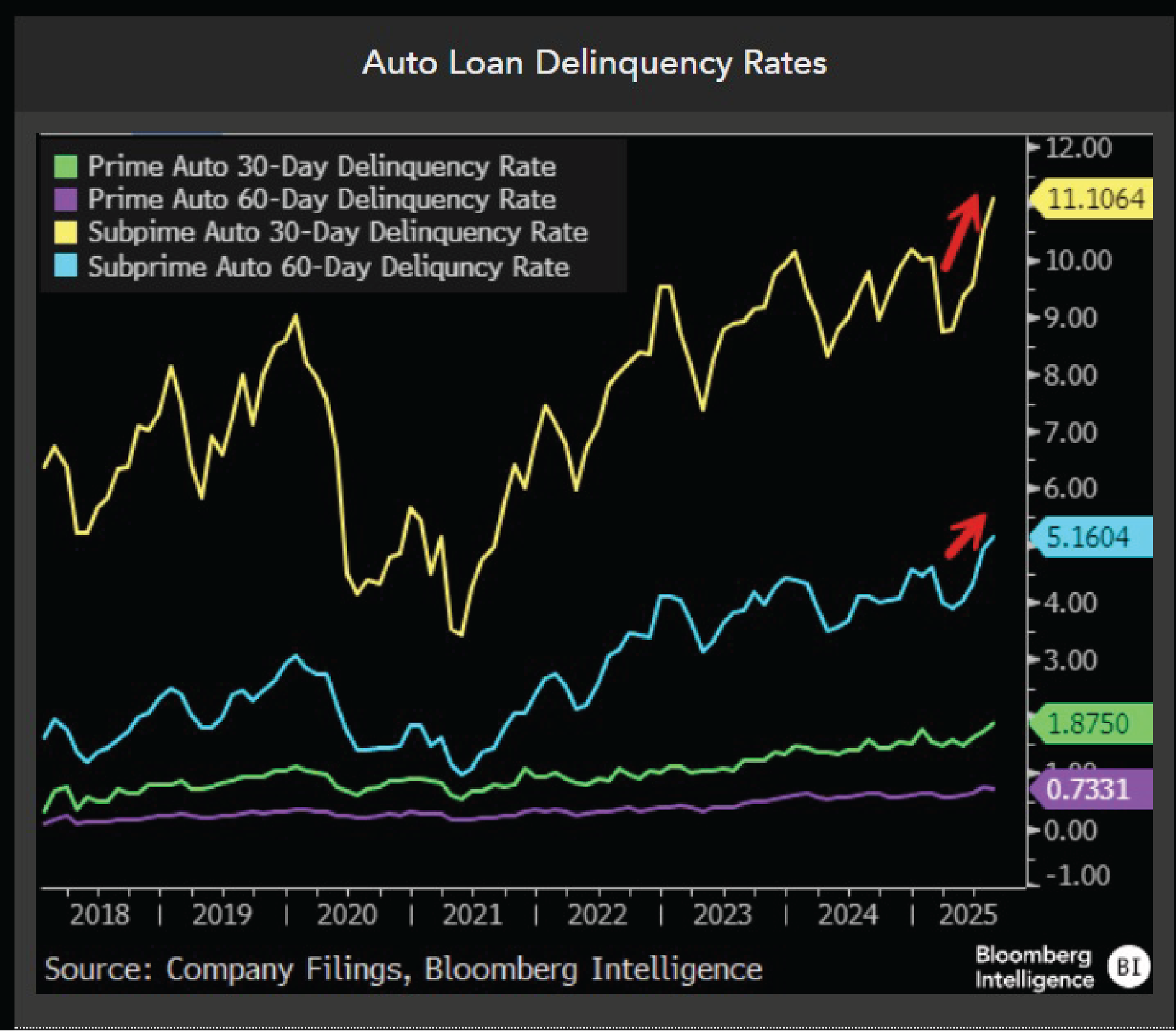
Beyond these headline bankruptcies, auto asset-backed securities (ABS) have shown signs of deterioration, reflecting stress among lower-income borrowers. CarMax shares fell over 20% after reporting that provisions for loan losses rose by about $30 million to $142 million year-over-year, driven by poor performance in some pandemic-era loans. Similarly, OneMain Holdings (OMF) reported delinquency rates up 23 basis points year-over-year in August, again reflecting stress concentrated among subprime borrowers. Subprime 30-day delinquencies have risen to 11.1%, while prime delinquencies remain steady at 1.8%, underscoring that most of the weakness is concentrated among riskier borrowers.[1]
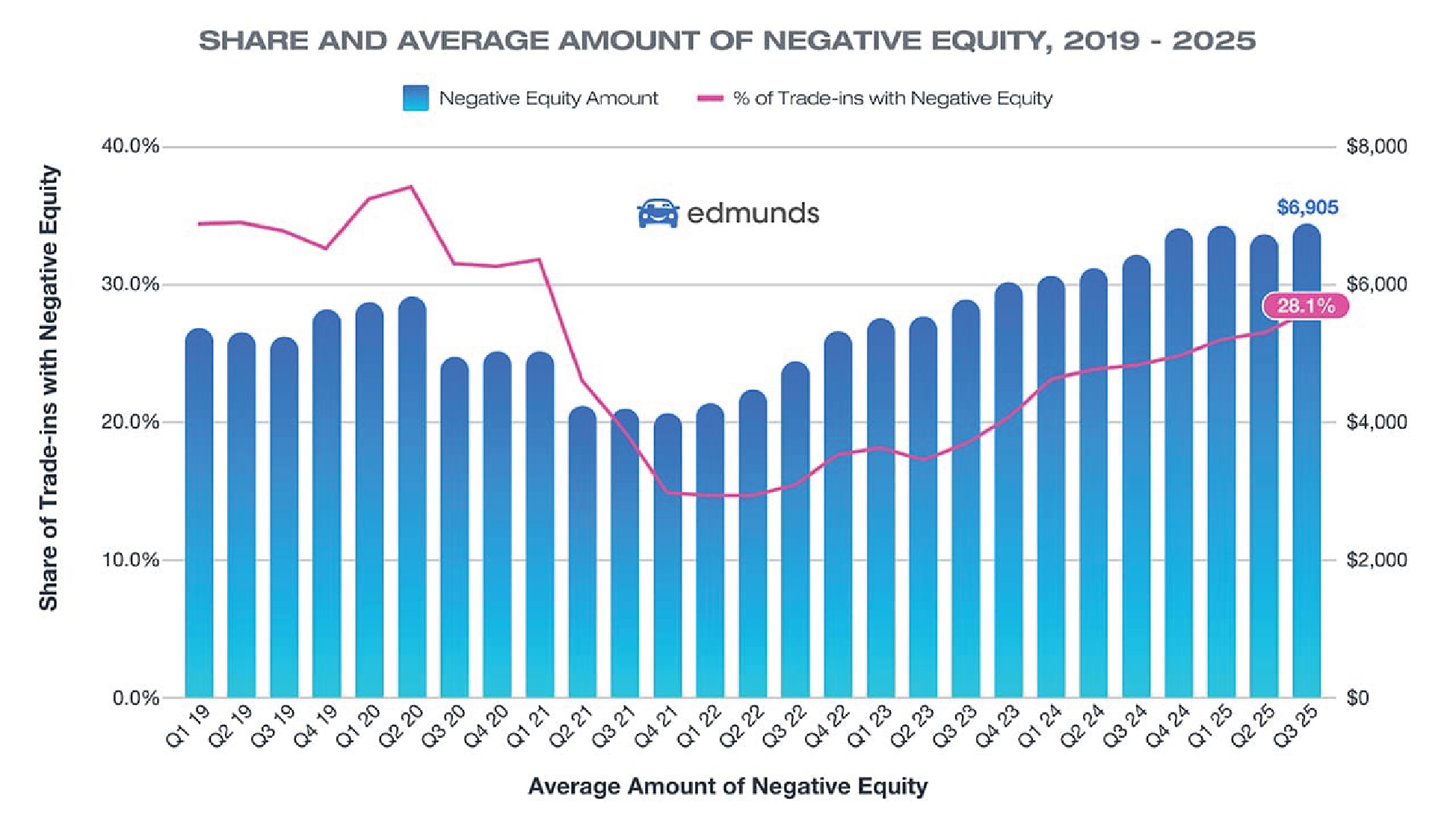
The combination of persistently high vehicle prices and rising financing costs has pushed more consumers underwater on car loans, with nearly 28% of trade-ins carrying negative equity, the highest rate in four years.[2] These factors are creating localized stress in the consumer lending ecosystem, particularly among smaller lenders and specialty finance companies.
Share and Amount of Negative Equity Car Loans:
Auto Loan Delinquency Rate
Regional Banks’ Earnings Provide Context
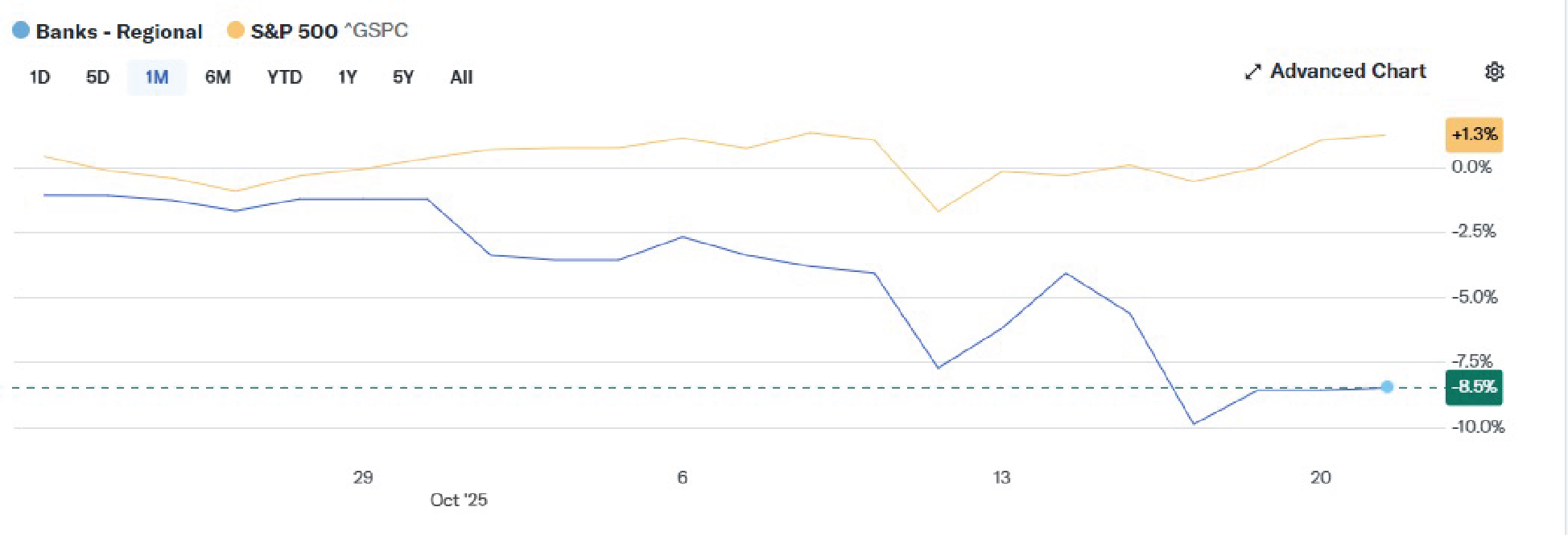
Recent regional bank earnings have highlighted how these credit concerns are being managed within the financial system. Fifth Third Bancorp (FITB) saw higher charge-offs this quarter, up 64 basis points year-over-year, driven by a $178 million impairment tied to Tricolor. Management noted that this issue had undergone “significant scrutiny” and reaffirmed confidence in the remaining portfolio. Excluding that one-time hit, net charge-offs were up just 7 bps year-over-year, with deposits and capital ratios both in line.
Huntington Bancshares (HBAN) painted a more reassuring picture, reporting positive overall credit performance and noting that most regional peers have de-risked significantly since the global financial crisis. Regions Financial (RF) acknowledged modest increases in delinquencies and charge-offs, attributing the rise to a specific credit resolution rather than portfolio weakness, reinforcing the message that exposures to struggling NDFI or subprime borrowers are manageable and diversified.
Regional Bank Performance
Large Cap Bank Earnings Reinforce Resilience
Despite the unsettling headlines, credit market volatility appears contained. Broader indicators of financial health remain stable, and policymakers have reiterated confidence in the system’s resilience. The broader financials sector is posting a blended year-over-year earnings growth rate of 18.2%, the second highest among all sectors[1].
Additionally, the third-quarter earnings season delivered a powerful reminder of the sector’s strength. Morgan Stanley stood out with 23.5% ROTCE and $18.2 billion in net revenue, up 18% year-over-year, driven by robust trading and record inflows of $81 billion into wealth management. Wells Fargo raised its medium-term ROTCE guidance to 17–18% and announced $30 billion in excess capital, signaling a new phase of expansion following the removal of its asset cap. Bank of America delivered a 9% increase in net interest income and expanded operating leverage by 560 basis points, while JPMorgan’s markets and investment banking units posted 25% and 16% revenue growth, respectively. Together, these results demonstrate that credit quality at large institutions remains strong, with delinquencies well-contained and balance sheets positioned to absorb volatility.
Subprime Weakness, Not Systemic Fragility
The divergence between subprime lenders and large financial institutions has become increasingly clear. Rising delinquency rates among companies like Tricolor and CarMax are concerning, but they represent a narrow slice of the market. Major banks have reported stable credit conditions and consistent performance across their prime and commercial lending portfolios. The current data suggest that delinquency concerns are limited to subprime borrowers, not the banking system as a whole. With unemployment low, wage growth steady, and consumer savings still above pre-pandemic levels, widespread credit contagion remains unlikely.
Stephanie Link’s TV Schedule:

[1] Bloomberg, as of October 2025
[2] Bloomberg as of October 2025
This material is for general information and educational purposes only. Information is based on data gathered from what we believe are reliable sources. It is not guaranteed as to accuracy, does not purport to be complete and is not intended to be used as a primary basis for investment decisions.
Find answers to your questions about Hightower Signature Wealth
Hightower Signature Wealth is a fiduciary wealth management practice that provides investment management, financial planning, estate strategies, insurance, and banking solutions. We work with families, business owners, professionals, women, and retirees across more than 40 offices nationwide. Our advisors take the time to understand your financial priorities, develop a plan around your goals, and adjust that plan as your life and circumstances evolve.
Hightower Signature Wealth provides a broad range of wealth management services designed to address different aspects of your financial life. Our capabilities include investment management, financial planning, retirement planning, estate strategies, insurance and risk management, banking solutions, and charitable giving strategies. By considering these areas together, our advisors can develop a coordinated approach based on your goals, priorities, financial circumstances, and plans for the future.
Hightower Signature Wealth advisors work with a broad range of clients, including women, families, business owners, professionals, retirees, and high-net-worth individuals navigating major life or financial transitions. Rather than applying a generic playbook, each advisor tailors the plan to a client’s specific goals and current stage of life – from early-career decisions to multigenerational wealth transfer.
Yes. Hightower Signature Wealth advisors serve as fiduciaries, which means they are committed to acting in their clients’ interests when providing investment advice. We offer fee-based advisory services, with fees depending on the services provided and the specifics of your relationship. Your advisor will discuss the applicable fee structure with you so you can understand how you are charged and what services are included.
Hightower Signature Wealth has more than 40 offices nationwide, allowing our advisors to serve individuals, families, and organizations across the country. Depending on your location and preferences, you may be able to work with an advisor locally or connect with a team in another market. Visit our Locations page to explore our office locations, learn more about the teams in each market, and find an office near you.
Getting started with Hightower Signature Wealth is simple. Complete our online contact form with some basic information about yourself and what you are looking for, and we’ll connect you with an advisor who can discuss your needs and financial priorities. That initial conversation is an opportunity to learn more about our approach, ask questions, and determine whether working with a Hightower Signature Wealth advisor may be a good fit.
Your first conversation is an opportunity for us to learn more about you, your financial circumstances, and what you hope to accomplish. An advisor may ask about your goals, current investments, family considerations, business interests, and other priorities that could influence your financial plan. You’ll also have an opportunity to ask questions, learn about our approach, and discuss what working together could look like.